If you’ve been searching for a Russian Rottweiler, you’ve probably seen people describe them as bigger, stronger, or even a completely different type of Rottweiler. That’s where a lot of the confusion starts.
The truth is much simpler.
A Russian Rottweiler is not a separate breed. It’s simply a name often used for Rottweilers bred in Russia and other parts of Eastern Europe, where some breeders prefer dogs with a larger frame, heavier bone structure, and a more powerful appearance.
Major kennel organizations, including the ADRK, FCI, and American Kennel Club (AKC), do not recognize the Russian Rottweiler as a separate breed.
These dogs have the same German origin as every other Rottweiler. The difference comes from breeding preferences, not from a different breed.
If you’re wondering whether a Russian Rottweiler is actually different from a German Rottweiler, whether they’re bigger, or whether the name is mostly a marketing term, you’ll find the answers in this guide.
What Is a Russian Rottweiler?
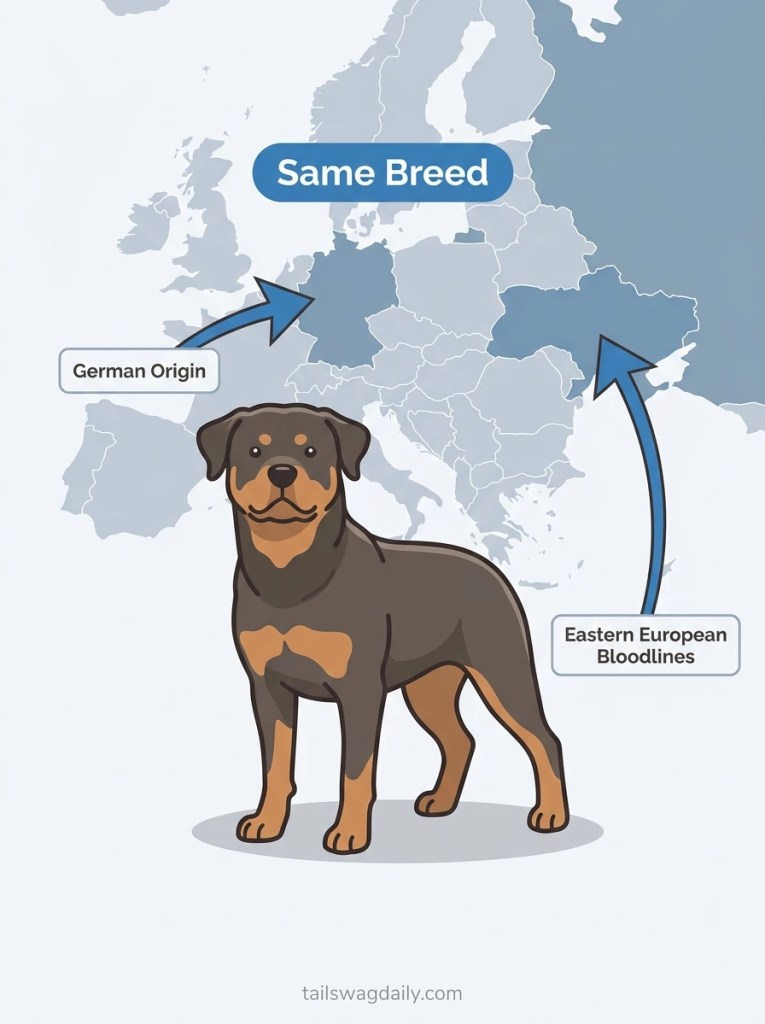
A Russian Rottweiler is not a different breed. It’s simply a Rottweiler that comes from bloodlines developed in Russia or other parts of Eastern Europe.
The name became popular because some breeders in these countries preferred dogs with a larger frame, heavier bone structure, and a stronger guarding appearance. Over time, people started calling these dogs “Russian Rottweilers” to separate them from lighter or more traditional German lines.
That doesn’t mean every Rottweiler bred in Russia will look the same. Some are noticeably bigger, while others look almost identical to Rottweilers from Germany or other countries.
The important thing to understand is that the name describes a breeding style, not a separate breed. Every Rottweiler, whether it’s called Russian, German, American, or Serbian, traces its roots back to Germany.
This is why major kennel organizations do not recognize the Russian Rottweiler as its own breed. They are all judged using the same Rottweiler breed standard.
So if you see a puppy advertised as a “Russian Rottweiler,” don’t assume you’re looking at a rare or exclusive breed. It’s still a Rottweiler, and what matters most is the dog’s health, temperament, pedigree, and the quality of the breeder.
Why Isn’t the Russian Rottweiler an Official Breed?
For a dog to be recognized as a separate breed, kennel organizations need to see a consistent breed standard. That means breeders must produce dogs with the same appearance, size, movement, and temperament over many generations.
That isn’t the case with the Russian Rottweiler.
The name is used by breeders and owners, but there is no official standard that defines what a Russian Rottweiler should look like. One breeder may use the name for a large, heavy-built dog, while another may use it for a dog that looks almost the same as a standard Rottweiler.
Because there isn’t a separate breed standard, major kennel organizations such as the ADRK, FCI, and AKC do not recognize the Russian Rottweiler as its own breed.
Instead, these dogs are registered and judged as regular Rottweilers using the same breed standard that applies to all Rottweilers, regardless of where they were bred.
So while the dogs themselves are real, the term “Russian Rottweiler” is simply an informal name. It describes a breeding style or bloodline preference, not a different breed.
Where Did the Name “Russian Rottweiler” Come From?
The term “Russian Rottweiler” isn’t an official breed name. It became popular because some breeders in Russia and other parts of Eastern Europe focused on producing larger, heavier Rottweilers with a strong guarding appearance.
As these dogs became more common, buyers started using names like “Russian Rottweiler” and “Serbian Rottweiler” to describe those bloodlines. Over time, the names spread through breeder websites, online ads, and social media.
It’s important to remember that these are informal names. They describe where a dog’s bloodline was developed or the style of breeding, not a different breed.
No matter what they’re called, all modern Rottweilers trace their origin back to Rottweil, Germany, where the breed was first developed.
Today, you may still see breeders advertising Russian, Serbian, or Eastern European Rottweilers. In most cases, they’re referring to the dog’s bloodline or appearance rather than a separate breed recognized by kennel clubs.
Russian vs. German Rottweiler: What’s the Difference, Really?
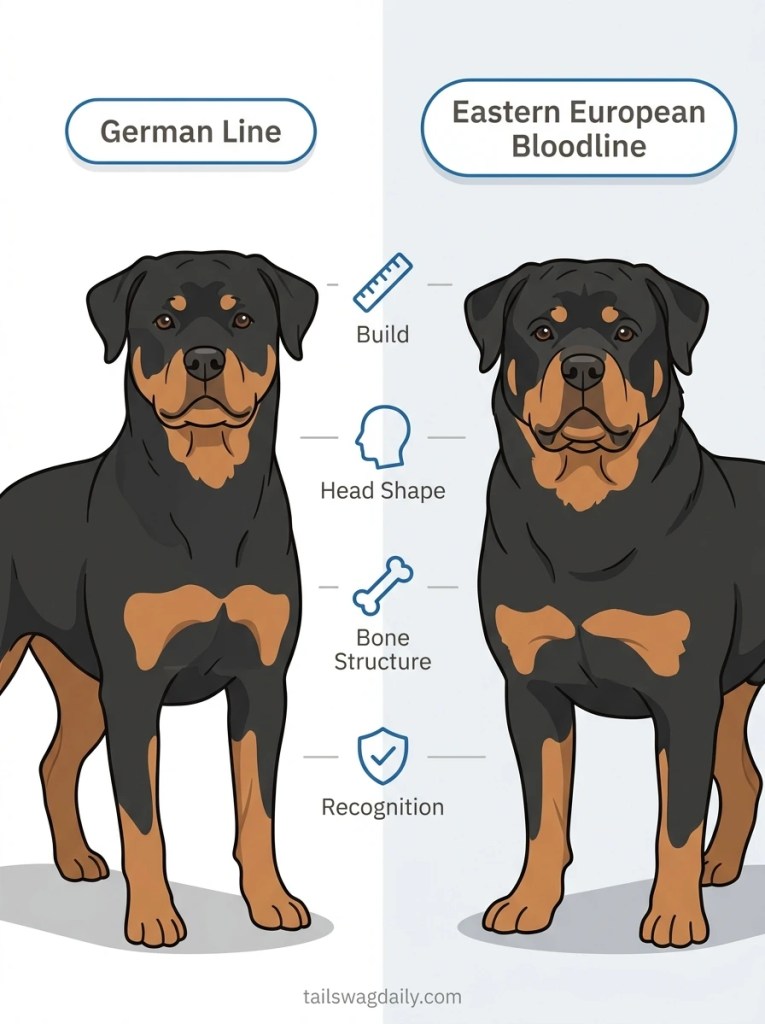
Since the Russian Rottweiler isn’t an official breed, there isn’t a separate breed standard to compare with the German Rottweiler. Most of the differences people talk about come from breeding preferences, not from different genetics.
Here’s what you’ll commonly notice.
| Feature | German Rottweiler | Russian / Eastern European Bloodlines |
|---|---|---|
| Breed status | Official Rottweiler standard | Not a separate breed |
| Build | Balanced and athletic | Often heavier and more muscular |
| Head | Well-proportioned | Often broader in some bloodlines |
| Bone structure | Strong | Often heavier |
| Temperament | Confident, calm, and steady | Similar temperament, though some lines are bred with stronger guarding instincts |
| Recognition | Recognized by major kennel clubs | Registered as regular Rottweilers |
The biggest difference is usually appearance. Many Eastern European breeders prefer larger dogs with heavier bone and a more powerful look. German breeders generally place more emphasis on meeting the official breed standard set by organizations like the ADRK and FCI.
That doesn’t mean every Russian-bred Rottweiler will be bigger than every German-bred one. There is plenty of overlap, and two dogs from different countries can look almost identical.
If you’re choosing a puppy, don’t focus only on where the bloodline comes from. A healthy dog with a stable temperament and responsible breeding is far more important than whether it’s advertised as German, Russian, or Serbian.
Are Rottweilers Good With Kids? 5 Reasons They Are (and 3 Reasons They’re Not)
Why Do People Think Russian Rottweilers Are a Separate Breed?
Most of the confusion comes from the way some puppies are advertised online.
It’s common to see terms like Russian Rottweiler, Serbian Rottweiler, or Eastern European Rottweiler used in breeder listings and social media posts. These names often describe the dog’s bloodline or appearance, but many buyers assume they refer to a completely different breed.
Another reason is that some Eastern European bloodlines do have a different look. Dogs from these lines may have a heavier build, broader head, or stronger guarding appearance, making them seem different from the Rottweilers people usually see.
Because of this, many people believe there’s an official Russian breed, even though major kennel organizations recognize them as standard Rottweilers.
If you’re looking for a puppy, don’t let the label influence your decision too much. A responsible breeder who health tests their dogs and provides proper pedigree records is far more important than whether the puppy is advertised as Russian, German, or Serbian.
Rottweiler with White Chest and Paws: Is It Normal or a Sign of a Mix?
How to Choose a Healthy Rottweiler Puppy

If a breeder advertises a puppy as a “Russian Rottweiler,” don’t let the name be the main reason you buy it. A healthy, well-bred puppy is far more important than any label.
Here are a few things to check before making a decision.
Ask for pedigree papers
A responsible breeder should be able to show your puppy’s pedigree and explain its bloodline. If they claim the puppy comes from Russian bloodlines, they should have documents to support that claim.
Ask about health testing
Rottweilers can be affected by inherited conditions such as hip and elbow dysplasia. Ask whether the parents have been health tested and request copies of the results if they’re available.
Meet the parents if possible
Seeing at least one parent can tell you a lot about the puppy’s future size, temperament, and overall condition. A confident, calm adult dog is usually a good sign.
Don’t be impressed by marketing terms
Words like giant, rare, XXL, or Russian champion bloodline may sound impressive, but they don’t automatically mean the puppy is healthier or better bred. Always ask for proof instead of relying on advertising.
Choose the breeder, not the label
A breeder who is open about health testing, pedigree, and the puppy’s upbringing is usually a better choice than one who focuses only on selling a “special” type of Rottweiler.
Rottweiler Growth Stages Explained (With Photos and Real Examples)
Do Russian Rottweilers Have a Different Temperament?
In general, no.
A Rottweiler bred in Russia is still a Rottweiler, so you can expect the same core personality traits the breed is known for. They’re loyal, confident, intelligent, and naturally protective of their family.
Some people believe Russian bloodlines are more aggressive, but there’s no evidence that simply being bred in Russia changes a dog’s temperament. A Rottweiler’s behavior is influenced far more by its genetics, early socialization, training, and daily environment.
That said, some breeders in Eastern Europe may place more emphasis on working ability and guarding instincts. Because of this, you may come across dogs that are more alert or more reserved around strangers. This doesn’t mean they’re aggressive. A well-bred and properly trained Rottweiler should be confident, stable, and under control.
No matter where your Rottweiler comes from, early socialization, consistent training, and regular exercise play the biggest role in shaping its temperament.
Physical Traits Often Seen in Russian Bloodlines
Because there isn’t an official Russian Rottweiler breed standard, no physical feature is guaranteed. However, many Rottweilers from Russian and other Eastern European bloodlines share a few common traits.
Heavier build
Many of these dogs have a solid, muscular body with heavier bone structure. They often appear more powerful than lighter-built Rottweilers, although there is plenty of variation between bloodlines.
Broader head
A wider head is another feature people often associate with Russian bloodlines. Some dogs have a more pronounced stop and a stronger-looking muzzle, giving them a more powerful appearance.
Strong chest and neck
Many Eastern European bloodlines are bred for a sturdy, balanced build. As a result, it’s common to see dogs with a broad chest and a thick, muscular neck.
Dense double coat
Like all Rottweilers, they have a short double coat. Dogs living in colder climates may develop a thicker undercoat during winter, but this is a natural response to the weather rather than a feature unique to Russian bloodlines.
While these traits are common in many Eastern European bloodlines, they aren’t guaranteed. Two Rottweilers from different countries can look very similar, and appearance alone can’t tell you where a dog’s bloodline comes from. A pedigree is the only reliable way to confirm a dog’s lineage.
Training and Caring for a Russian Rottweiler
Despite the name, a Russian Rottweiler doesn’t need any special training or care. Since it’s still a Rottweiler, the same basic approach applies.
Start training early
Begin training and socialization while your puppy is young. Introducing your dog to different people, places, and situations helps build confidence and reduces the chance of fear-based behavior later in life.
Be consistent
Rottweilers learn best when the rules stay the same. Use clear commands, reward good behavior, and avoid harsh punishment. Consistent training builds trust and produces better long-term results.
Provide daily exercise
Rottweilers are an active working breed. Daily walks, playtime, and mental activities help keep them healthy and prevent boredom.
Feed a balanced diet
A large, muscular dog needs high-quality food that supports healthy growth and maintains a proper body condition. Avoid overfeeding, as extra weight can put more stress on the joints.
Keep up with regular health care
Routine veterinary checkups, vaccinations, parasite prevention, and dental care are all important. Responsible care throughout your dog’s life will have a much greater impact than the country its bloodline came from.
Whether your Rottweiler is advertised as Russian, German, or Serbian, good training, proper care, and responsible ownership are what shape a healthy and well-behaved dog.
What Does “Pure Russian Bloodline” Really Mean?

You may come across breeders advertising puppies from a “pure Russian bloodline.” This doesn’t mean the dog belongs to a separate Russian breed.
In most cases, it simply means the dog’s parents, grandparents, or earlier generations came from breeding lines developed in Russia or other parts of Eastern Europe.
A pedigree can show where a dog’s bloodline comes from, but it doesn’t change the breed itself. A Rottweiler with Russian ancestors is still a Rottweiler.
When looking at puppies, don’t assume that a “pure Russian bloodline” automatically means better quality. The health, temperament, structure, and responsible breeding of the individual dog are much more important than the country listed on its pedigree.
If a breeder uses terms like “pure Russian bloodline,” ask to see the pedigree and health records. A reputable breeder should be happy to explain the dog’s lineage and answer your questions.
Common Myths About Russian Rottweilers
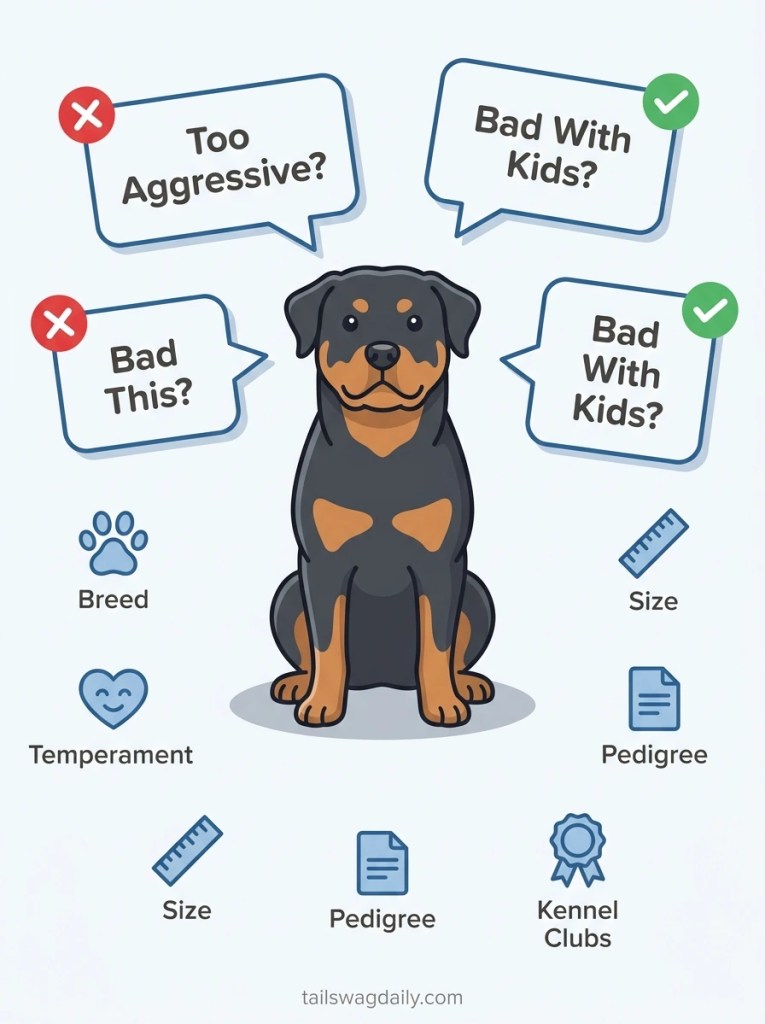
Myth: Russian Rottweilers are a separate breed.
Fact: No. Major kennel organizations do not recognize the Russian Rottweiler as a separate breed. It’s simply a name used for certain bloodlines or breeding styles.
Myth: Every Russian Rottweiler is much bigger than a German Rottweiler.
Fact: Not always. Some Eastern European bloodlines are bred for a heavier build, but size varies from dog to dog. A German-bred Rottweiler can easily be larger than a Russian-bred one.
Myth: Russian Rottweilers are naturally more aggressive.
Fact: A dog’s behavior depends much more on genetics, socialization, training, and responsible ownership than the country its bloodline comes from.
Myth: A “Russian bloodline” means higher quality.
Fact: A bloodline only tells you where the dog’s ancestors came from. It doesn’t guarantee better health, temperament, or structure. Those depend on the quality of the breeding program.
Myth: You can identify a Russian Rottweiler just by looking at it.
Fact: No. Some dogs from Russian bloodlines may have a heavier build or broader head, but appearance alone cannot confirm a dog’s lineage. A pedigree is the only reliable way to verify a bloodline.
Should You Get a Russian Rottweiler?

A Russian Rottweiler can be an excellent companion if you’re looking for a loyal, confident, and protective dog. However, the name “Russian” shouldn’t be the reason you choose one.
Instead, focus on finding a puppy from a responsible breeder who health tests their dogs, provides pedigree records, and raises puppies in a healthy environment. These factors have a much bigger impact on your dog’s future than the country its bloodline comes from.
Before bringing any Rottweiler home, ask yourself a few important questions:
- Do you have enough time for daily training and exercise?
- Can you provide consistent leadership and socialization?
- Are you prepared for the costs of food, veterinary care, and other long-term expenses?
If the answer is yes, a well-bred Rottweiler can become a loyal family companion for many years, whether it’s advertised as Russian, German, Serbian, or simply a Rottweiler.
At the end of the day, a good breeder and a healthy puppy are far more important than any marketing label.
Frequently Asked Questions
Is a Russian Rottweiler a real breed?
No. A Russian Rottweiler is not a separate breed. It’s an informal name used for some Rottweilers bred in Russia and other parts of Eastern Europe.
Why are they called Russian Rottweilers?
The name is mainly used to describe certain bloodlines that are often bred for a larger, heavier appearance. It does not mean the dog belongs to a different breed.
Are Russian Rottweilers bigger than German Rottweilers?
Some Russian and Eastern European bloodlines may produce larger dogs, but this isn’t always the case. Size depends on the individual dog’s genetics and breeding, not simply the country it comes from.
Are Russian Rottweilers recognized by the AKC or FCI?
No. Organizations such as the American Kennel Club (AKC), Fédération Cynologique Internationale (FCI), and ADRK recognize them as standard Rottweilers, not as a separate breed.
Are Russian Rottweilers more aggressive?
No. A dog’s temperament depends on genetics, training, early socialization, and its environment. Being bred in Russia does not automatically make a Rottweiler more aggressive.
How can I tell if a Rottweiler has Russian bloodlines?
The only reliable way is through pedigree papers. Appearance alone cannot confirm where a dog’s bloodline comes from.
Should I pay more for a Russian Rottweiler?
Not just because of the name. A healthy puppy from a responsible breeder is worth far more than a puppy marketed with a special label but lacking proper health testing or pedigree documentation.
What’s the average lifespan of a Russian Rottweiler?
Their lifespan is generally the same as other Rottweilers, usually around 8 to 10 years with proper care, a healthy diet, and regular veterinary checkups.
Final Thoughts: So, Are Russian Rottweilers Real?
A Russian Rottweiler isn’t a separate breed. It’s simply a name commonly used for Rottweilers from Russian and other Eastern European bloodlines, where some breeders prefer a larger and heavier build.
If you’re thinking about buying one, don’t focus on the label alone. A healthy puppy from a responsible breeder with proper health testing and pedigree records is always a better choice than a puppy sold with impressive marketing terms.
Whether a Rottweiler comes from Russia, Germany, Serbia, or anywhere else, what matters most is its health, temperament, training, and the care it receives throughout its life.
Choose the dog, not the label, and you’ll be much more likely to bring home a confident, well-balanced companion.
Sources: ADRK, FCI breed standards